
INSIGHTS
Customer Intimacy. What does it mean for B2B Sales and Marketing
Customer intimacy. The need and benefit of a real connection
Our blogs are typically inspired by our connections with customers, lessons from projects, and the beautiful human interactions we have along the way. A few months ago, a head of sales contacted me to ask why we had recommended his company’s offer over larger, better-known brands. Over coffee, he shared that he was struggling to make the right connections. That simple act of opening up and asking for help made me see him and the brand he represented in a different light. And of course, I helped.
As a team of marketers and commercial strategists, we’ve been obsessing over the tension between some brands’ drive to adopt AI and reduce costs and their failure to consider how they’ll create customer value. For us, the notion of customer intimacy is a genuine and meaningful way to create value. But it’s often overlooked because it’s not taken seriously or is difficult to measure.
Why customer intimacy matters
OK, let’s get this out of the way. Intimacy is often mistaken for mere physical or romantic closeness, but in psychological terms, it’s about being genuinely known and deeply understood by another person. Customer intimacy is real, and for the smarter brands, it’s becoming increasingly important.
- In entertainment and music, live gigs are surging back. You only need to see the brand investment in Coachella to prove it.
- In media, out-of-home advertising is having a moment — a rare chance for people to lift their heads and take in what’s around them.
- In social media, content is about the creator, not just the brand.
- In wellness, the gym is evolving into a health club — and a place to belong.
- Team sport participation is on the rise
- And dating apps have been swiped for run clubs
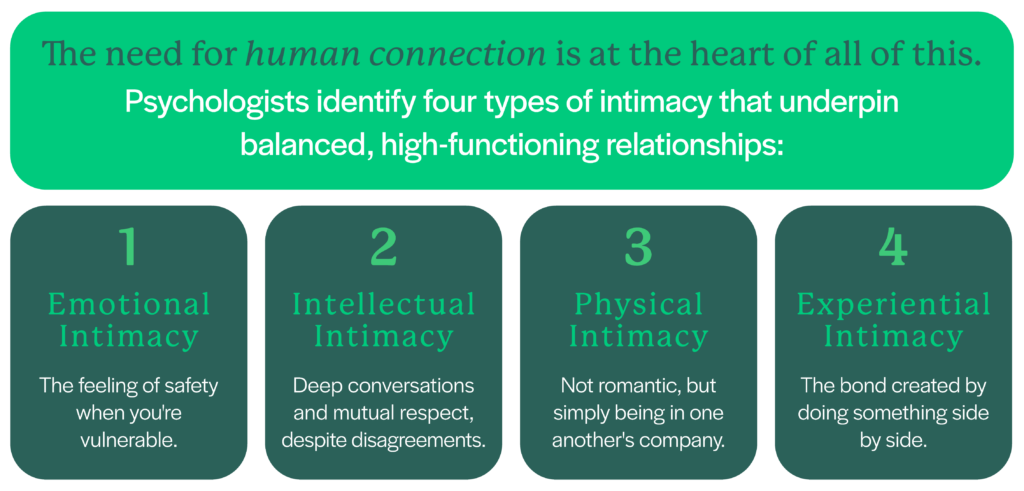
Intimacy doesn’t just happen; it’s built through consistent, intentional behaviour. The price of entry is openness. From there come trust, security and reciprocity.
What this means for B2B
In B2B sales and marketing, intimacy is the foundation of seriously valuable relationships, where both parties feel mutual benefit, trust and a shared sense of purpose. Many B2C brands are already ahead here, moving from broadcast advertising towards authentic creator content, brand activations and events that bring the relationship to life. IRL is back.
- Pop-up shops create urgency and let customers touch and try products
- Brand activations are interactive events designed to get people talking
- Guerrilla marketing — unconventional, low-cost physical interactions — is making a comeback
- Community events foster experiential intimacy between brand and customer
After years of digital dominance, many B2B buyers are exhausted. IRL strategies cut through social media noise and create the kind of tangible connection that a LinkedIn post simply cannot. Three examples stand out, BT’s Aura experience centres let CTOs physically interact with a smart city or factory of the future — creating experiential intimacy and genuine excitement, Adobe’s Content Authenticity events use gallery-style showcases to demonstrate the provenance of digital art, turning a software feature into a tangible social mission and Shopify’s pop-up playgrounds take over vacant shopfronts to inspire business owners and demonstrate what the platform can actually do
For CRM teams, this means using data to feel personal
For those managing customer data and lifecycle communications, intimacy starts with how you use what you know. A CRM packed with behavioural signals is only as powerful as the intent behind its use. Rather than automating for efficiency alone, ask whether this communication makes the customer feel known. Small shifts matter enormously. Milestone-based triggers, such as a customer’s one-year anniversary, the completion of a major project, and a notable renewal, are opportunities to acknowledge the relationship rather than push the next offer. Tone in communications is make-or-break here, as a personalised message at these moments builds the kind of emotional intimacy no promotional email can. Data can also remove friction: if a long-standing customer must re-explain their situation every time they contact you, no amount of warm messaging will make up for it. Intimacy in CRM is equal parts communication and operational respect.
For B2B sales, we must not forget the art of being human
The CRO in my opening story didn’t win me over with a proposal deck or referral incentive. He asked a genuine question over coffee. That’s the model. In B2B sales, intellectual and emotional intimacy are your most underused tools. Sharing a relevant challenge you’ve faced, asking a question you don’t know the answer to, or acknowledging a competitor’s genuine strengths builds trust faster than any follow-up sequence.
In practice, this means designing a sales process that includes moments that aren’t about the deal. An informal session to explore a customer’s wider ambitions. A peer introduction that helps them beyond your product. In a world of automated outreach and AI-drafted emails, a human moment that builds trust can be a huge differentiator.
For local area marketing teams, proximity is a superpower
Of all the marketing disciplines, local area marketing is perhaps the most naturally suited to intimacy and is often treated as a poor cousin!! Physical proximity, shared community identity, and the ability to show up in person are advantages that global brands are trying to emulate (just see the upcoming World Cup for examples). Experiential intimacy is built through participation, not presence. The most powerful local marketing strategies aren’t necessarily campaigns; they’re relationships built through presence.
Use AI and build value around it
Automation and digital efficiency have a clear place. But the brands, and the salespeople who will stand apart, create space in their mix for something less scalable, less planned, yet much more meaningful. The ones who show up, ask real questions, and make their contacts, customers, or networks and communities feel genuinely known. In the end, that’s what intimacy has always been about. It’s not measurable, but it’s beautifully human.
As B2B experts, we love the opportunity to chat with clients and help solve their commercial challenges. If you’re not sure how to appraoch a challenge or want fresh perspectives, reach out. Drafted by Lisa Edmonds, Founding Partner, Emmet Consulting.